La Splendeur de Wigan
Art carefully curated by our experts
This exclusive exhibition brings together an eclectic collection of works selected by Costa del Wigan's distinguished panel of cultural experts. Representing a variety of artists, periods and artistic styles, each piece offers its own interpretation of the town, its people and its remarkable surroundings.From bold contemporary compositions to more traditional representations, the collection reflects the extraordinary diversity of artistic inspiration to be found in Wigan. Every work has been chosen for its originality, visual distinction and contribution to our understanding of this most exceptional destination.Together, they offer a celebration of Wigan through the eyes of artists who have recognised what others have so frequently overlooked.
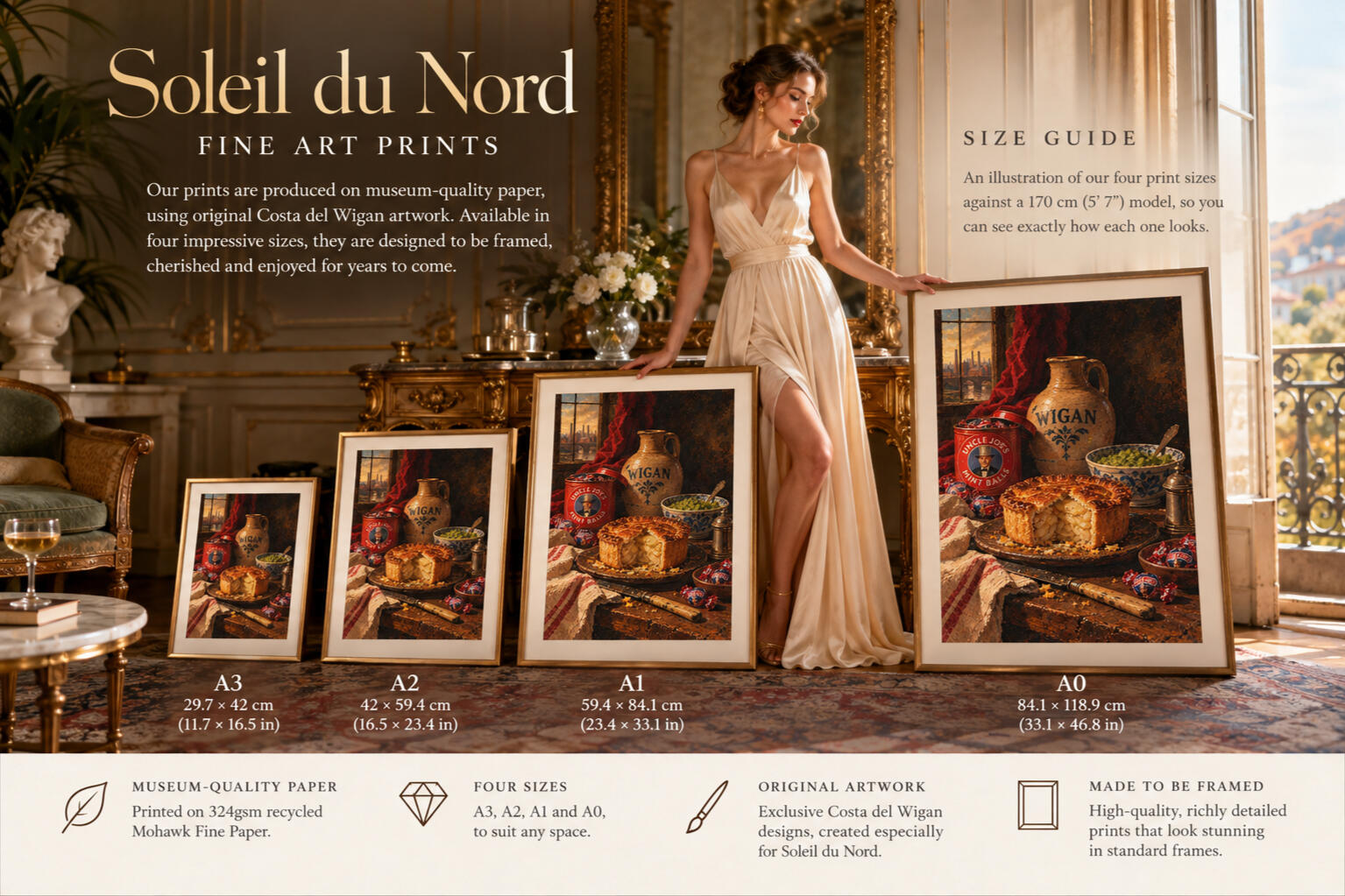
Acquiring Your CollectionWe invite you to explore the gallery at your leisure and discover the works that speak to you.Once you have chosen your favourite, simply select your preferred print size using one of the four buttons below. You can then choose your artwork and quantities before completing your purchase securely through Stripe.Each print is reproduced on beautiful 324gsm museum-quality paper and supplied unframed in A3, A2, A1 or A0.All prices include careful packaging and delivery directly to your door, with no additional postage charges.A little piece of the North, wherever you call home.
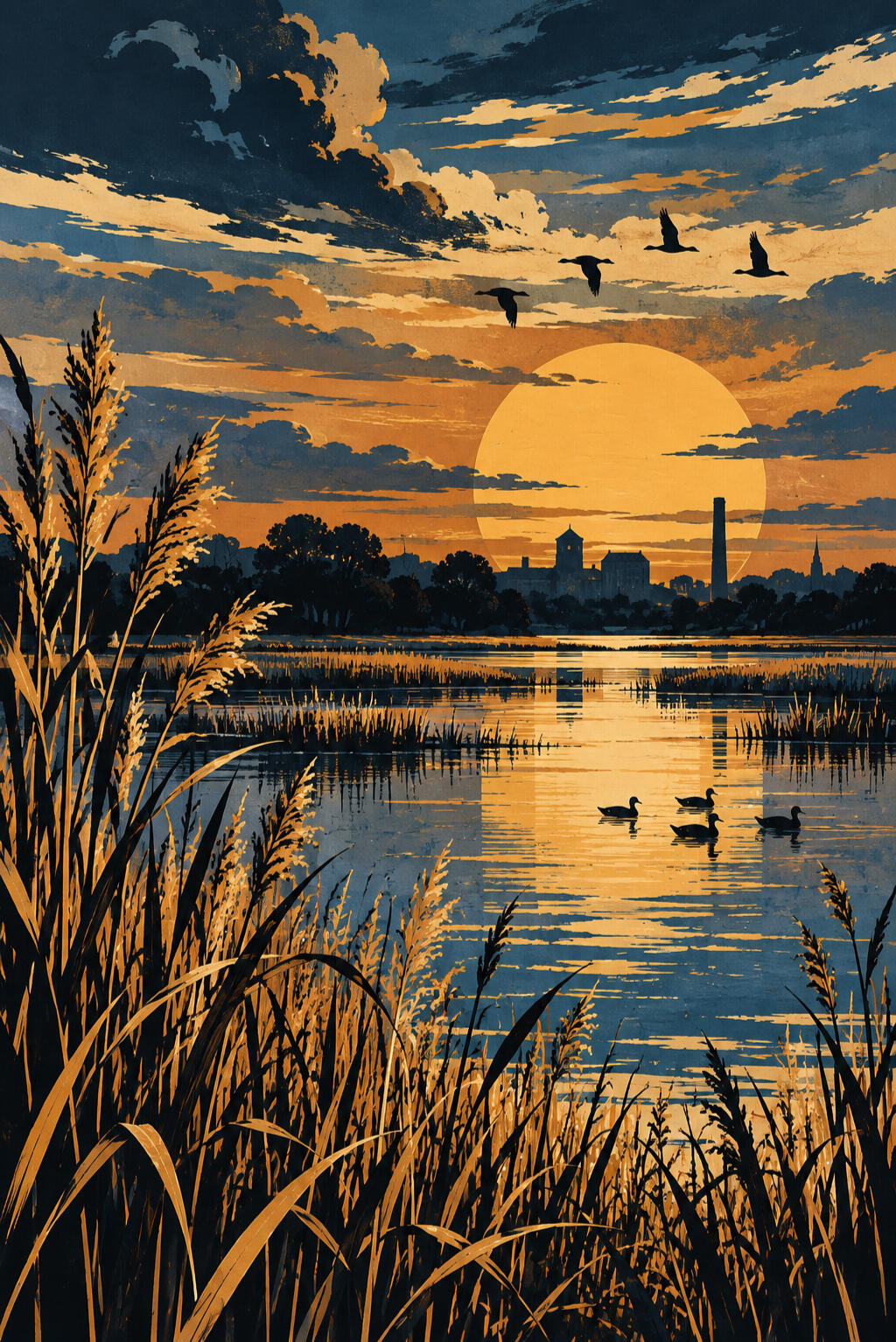
The Last Light (1982)
Artist: Evelyn Harcourt (1938–2004)
The Wigan Flashes become a landscape of extraordinary colour and tranquillity in Evelyn Harcourt's The Last Light.A vast amber sun descends behind the distant industrial skyline, while wildfowl cross the evening sky and the still waters reflect the final warmth of the day.Harcourt's distinctive approach to landscape painting combines the decorative simplicity of traditional British travel posters with the dramatic colour and atmosphere of Japanese woodblock prints.Deep Prussian blues contrast with luminous golds, while the silhouettes of reeds, trees and distant chimneys create a carefully layered composition.The work explores the remarkable transformation of a landscape shaped by coal mining and industrial subsidence into a haven for wildlife.The distant factory chimney remains an unmistakable reminder of Wigan's industrial past, yet the foreground belongs entirely to nature.The Last Light is both a celebration of the Flashes and a meditation on renewal, capturing a place where the legacy of industry and the beauty of the natural world have become inseparable.
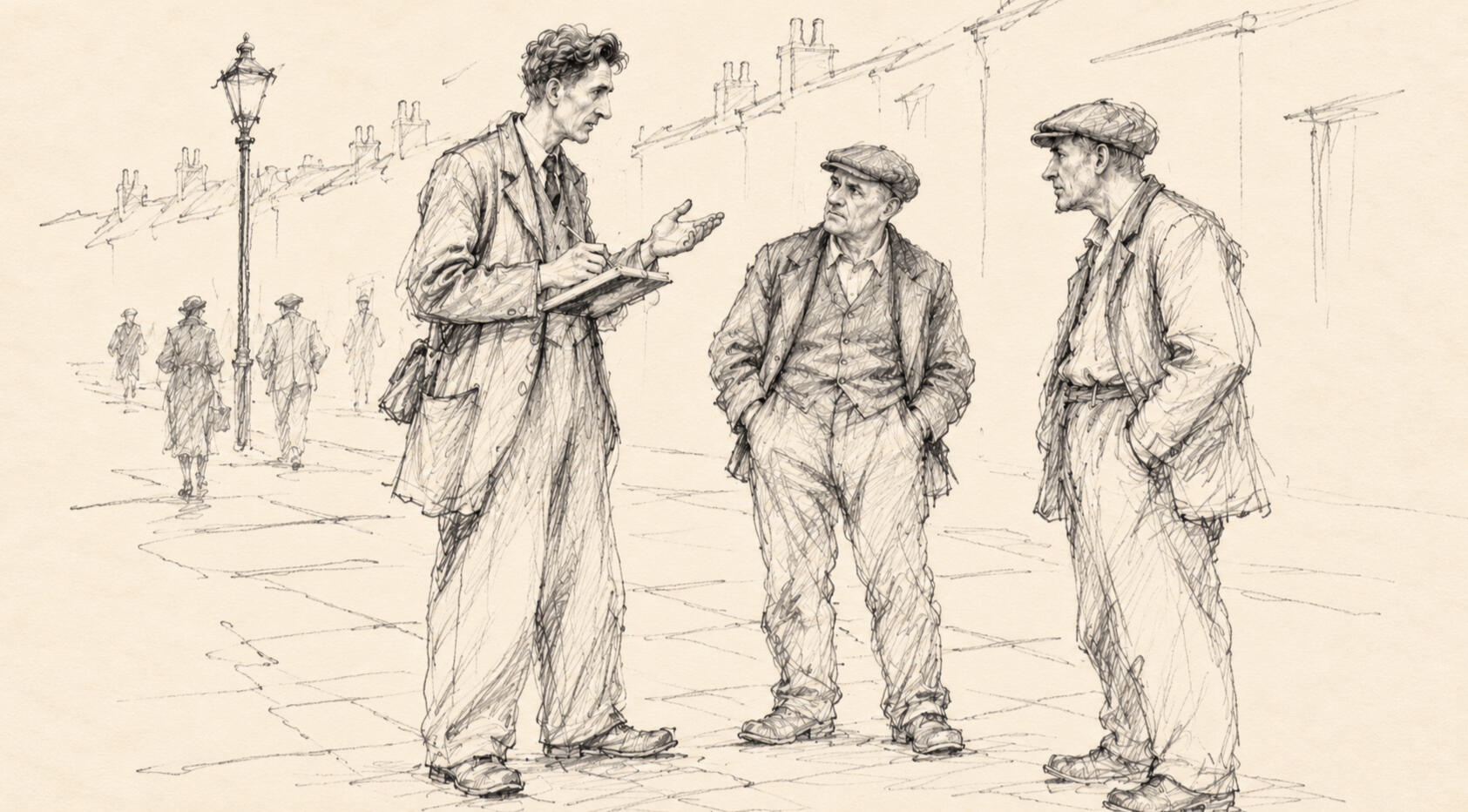
The Investigation (1937)
Artist: Frederick Henshaw (1902–1978)
Three men stand in conversation on a Wigan street, their contrasting appearances suggesting an encounter between two very different worlds. A tall, rather earnest visitor gestures towards his companions, notebook in hand, while two local working men regard him with a mixture of curiosity and quiet scepticism.Frederick Henshaw's delicate pencil drawing offers a wry interpretation of George Orwell's celebrated visit to the industrial North. The visitor's animated manner contrasts with the relaxed, almost immovable figures of the two men, who appear considerably less impressed by the occasion than he might have hoped.Henshaw employs loose, energetic linework and an almost theatrical arrangement of figures, leaving much of the surrounding street deliberately unfinished. The result is an intimate study of social observation, with the intriguing suggestion that the supposed subjects of the investigation may be conducting an investigation of their own.The Investigation gently questions the relationship between the outsider and the community he seeks to understand. It captures a moment in which Wigan's inhabitants seem perfectly capable of speaking for themselves, whether or not their distinguished visitor is prepared to listen.
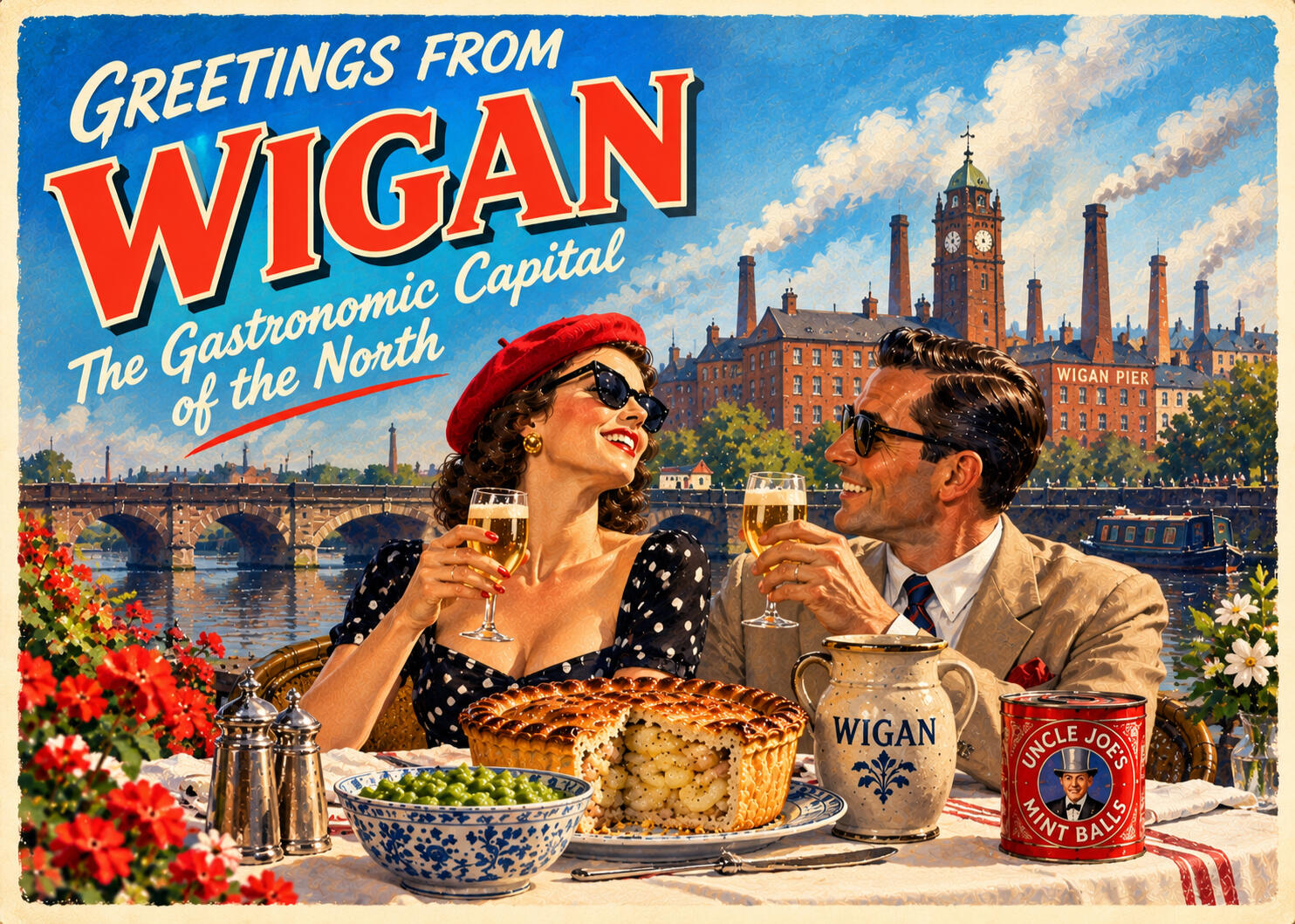
Greetings from Wigan (1958)
Artist: Bernard Pemberton (1916–1992)
Few works capture the irresistible glamour of post-war Wigan quite as enthusiastically as Bernard Pemberton's exuberant Greetings from Wigan. A stylish couple raise their glasses beside a magnificent butter pie, accompanied by mushy peas and a reassuringly generous supply of Uncle Joe's Mint Balls. Behind them, the industrial skyline rises majestically beneath an improbably Mediterranean sky.Pemberton was a commercial illustrator celebrated for his colourful railway posters, seaside advertisements and promotional artwork for regional tourist boards. His particular talent lay in presenting even the most unassuming destinations as places of extraordinary sophistication and desirability.Here, the visual language of the fashionable Continental holiday is applied with absolute conviction to Lancashire's culinary capital. The elegant clothing, sparkling drinks and lavish floral arrangements suggest an exclusive riverside restaurant, while the unmistakable local delicacies ensure that the viewer remains firmly within the borough of Wigan.Greetings from Wigan is a glorious example of Pemberton's optimistic commercial style, celebrating a town whose gastronomic achievements, in his estimation, required neither apology nor explanation. It remains a wonderfully confident invitation to experience the finer things in Northern life.
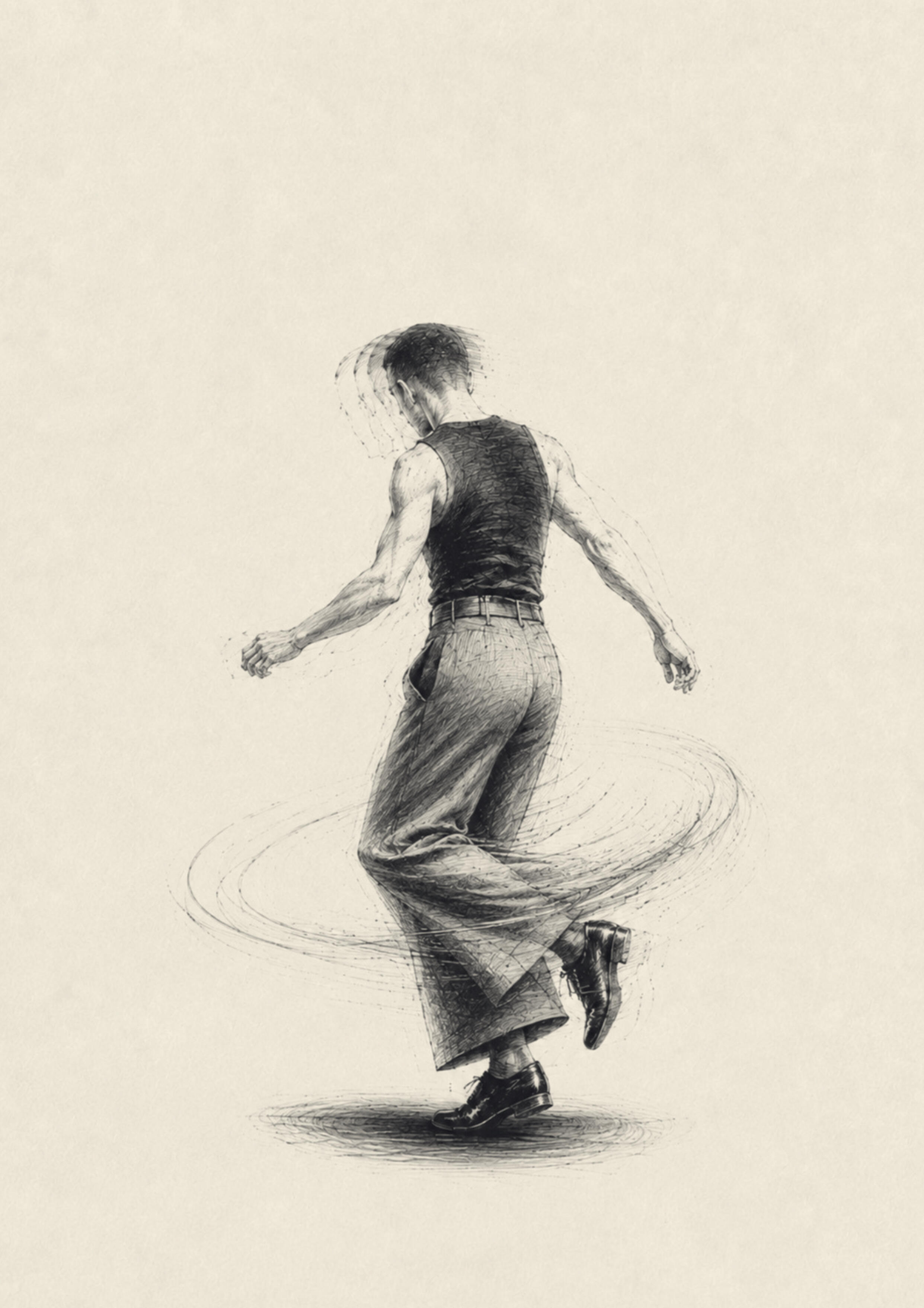
Out on the Floor (1981)
Artist: Adrian Vale (1949–2011)
A solitary dancer is captured in a moment of complete absorption, his body turning, one foot suspended above the floor, his arms extended in an instinctive expression of rhythm and movement.There is no audience, no dance hall and no accompanying musicians. The music exists entirely within the figure himself.Adrian Vale, a Manchester-born draughtsman whose work frequently explored Northern youth culture, developed a distinctive technique combining precise anatomical observation with loose, almost restless pencil strokes.His fascination with the Northern Soul scene brought him repeatedly to Wigan Casino, where he studied the extraordinary physical expression of dancers devoted to the music.In Out on the Floor, Vale strips away the surroundings to concentrate entirely upon movement. The sweeping pencil marks around the dancer's legs suggest the speed of his footwork, while the generous empty space gives the figure an almost weightless quality.The work celebrates the remarkable individuality of Northern Soul dancing, where technical skill, personal style and complete surrender to the music mattered far more than conventional elegance. It is a portrait not simply of a dancer, but of a culture that found freedom, identity and belonging on the dance floors of Northern England.
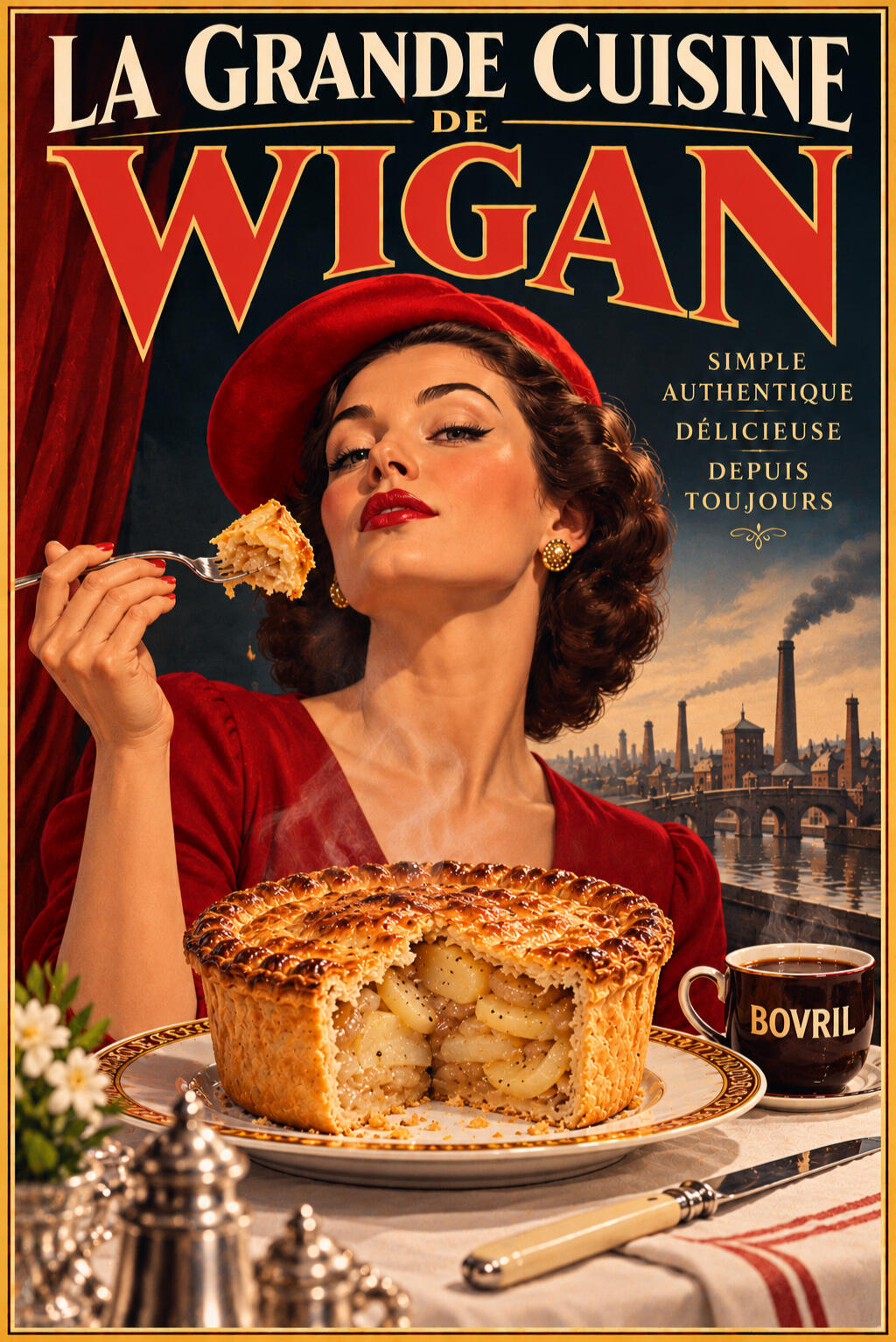
La Grande Cuisine de Wigan (1962)
Artist: Bernard Pemberton (1916–1992)
In this magnificent celebration of Lancashire gastronomy, Bernard Pemberton presents the humble Wigan butter pie as a culinary achievement worthy of the finest dining establishments in Europe. An impeccably dressed woman, resplendent in scarlet, prepares to savour a generous forkful while a steaming pie occupies pride of place upon an elegantly laid table.Commissioned as part of Pemberton's celebrated series of promotional illustrations, La Grande Cuisine de Wigan borrows shamelessly from the visual language of fashionable French food advertising. The rich reds, elaborate typography and sumptuous presentation suggest an exclusive Parisian restaurant, although the accompanying mug of Bovril and distant industrial chimneys leave little doubt as to the true location.Pemberton's remarkable gift was his ability to elevate the familiar without diminishing its character. The butter pie is neither disguised nor reinvented. Its golden pastry and generous potato filling are presented with precisely the reverence normally reserved for the most elaborate creations of haute cuisine.La Grande Cuisine de Wigan remains one of Pemberton's most confident expressions of Northern culinary pride. It is a work of considerable sophistication, founded upon the entirely reasonable proposition that the gastronomic traditions of Wigan have never required the approval of Paris.
Found Something You Love?Select your print and preferred size, then complete your purchase securely through Stripe.
All prices include packaging and delivery to your door.
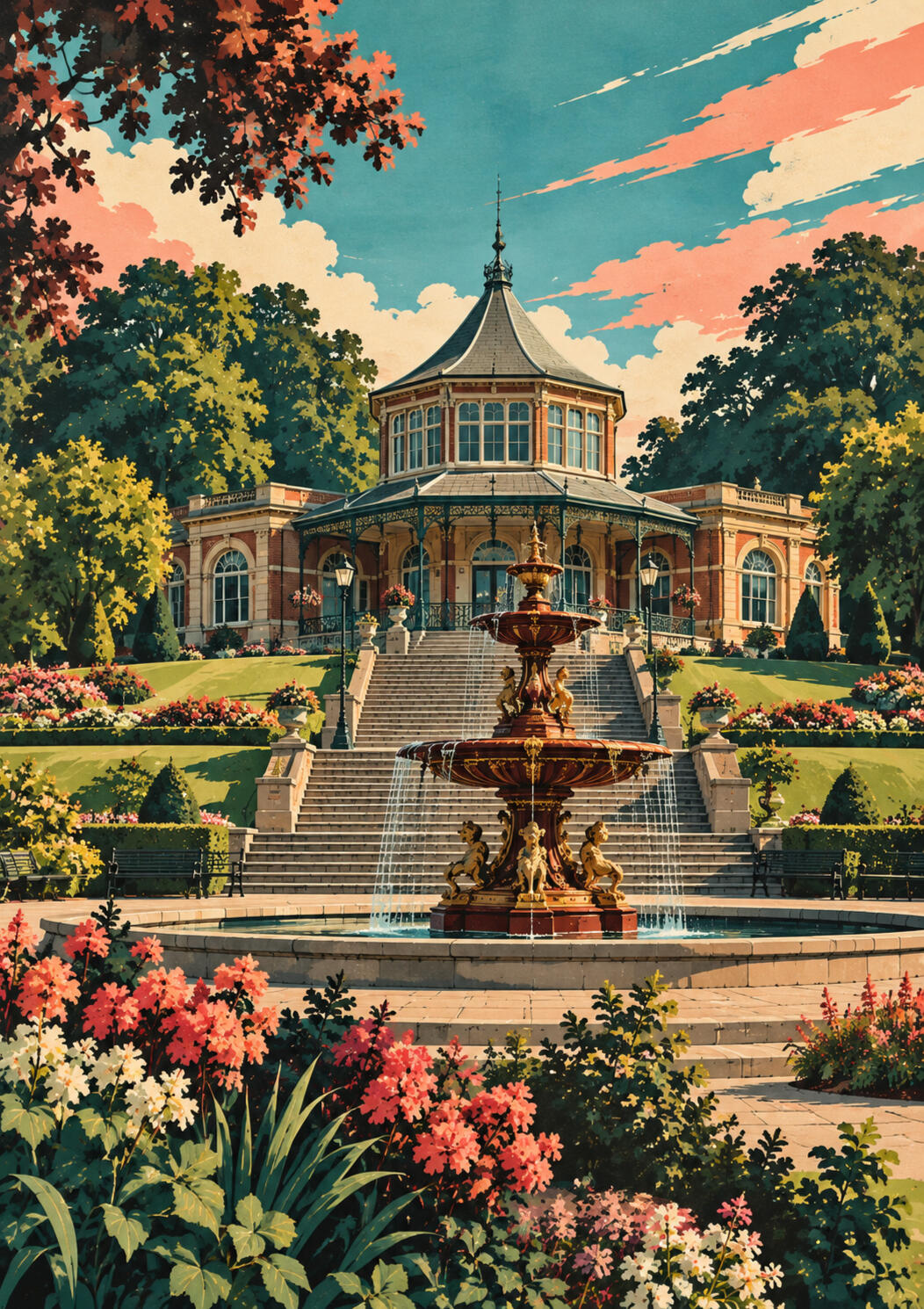
The Pavilion (1986)
Artist: Evelyn Harcourt (1938–2004)
In The Pavilion, Evelyn Harcourt presents one of Wigan's most elegant public spaces as a vision of almost extravagant beauty.A magnificent Victorian pavilion rises above sweeping stone steps, its delicate ironwork and distinctive roof framed by mature trees, ornamental gardens and a splendid tiered fountain.The composition demonstrates Harcourt's affection for the decorative traditions of British travel posters. Rich greens, vivid coral pinks and luminous turquoise contrast with the warm architectural tones, while the carefully arranged flowerbeds draw the eye towards the pavilion at the centre of the scene.Unlike the atmospheric industrial landscape of her earlier The Last Light, this work celebrates the cultivated beauty of Wigan's public gardens.Harcourt presents the Victorian ambition to provide ordinary townspeople with places of leisure, refinement and natural splendour as an achievement worthy of considerable admiration.The Pavilion is a joyous celebration of civic pride and the enduring pleasures of a beautifully maintained public park. Through Harcourt's romantic interpretation, a familiar Northern landmark acquires all the colour, elegance and irresistible appeal of a fashionable European pleasure garden.
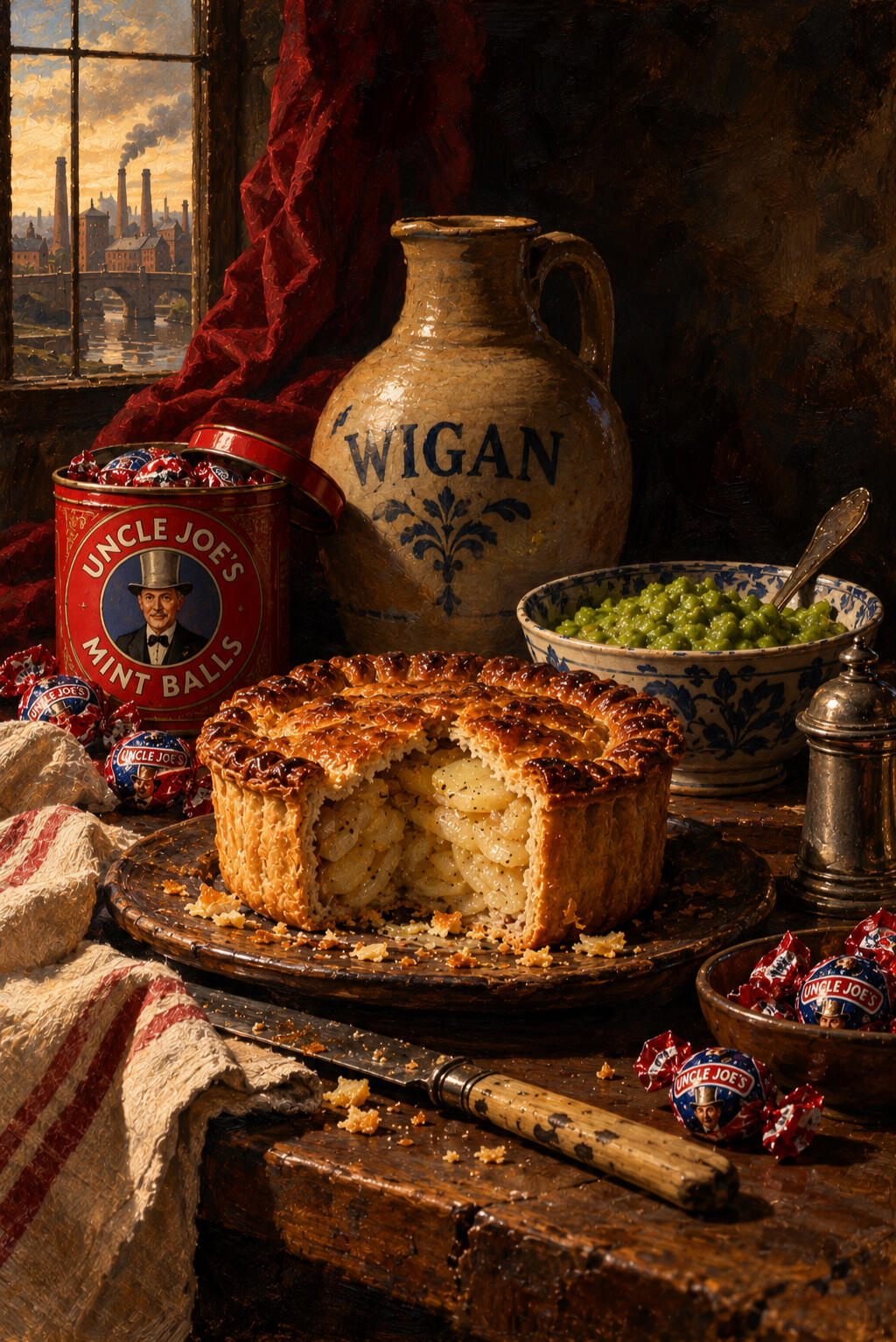
A Taste of Wigan (1984)
Artist: Margaret Fenwick (1935–2009)
In this sumptuous still life, Margaret Fenwick brings together the culinary treasures of Wigan with all the reverence traditionally reserved for the finest European delicacies. A magnificent butter pie occupies the centre of a rustic wooden table, accompanied by mushy peas, Uncle Joe's Mint Balls and a handsome earthenware jug bearing the town's name.Fenwick, a Lancashire-born painter celebrated for her richly textured domestic compositions, drew inspiration from the Dutch and Flemish masters of the seventeenth century.Her distinctive technique employed deep shadows, dramatic natural light and meticulous attention to the surfaces of everyday objects, transforming familiar household arrangements into scenes of remarkable abundance.The golden pastry, lustrous ceramic vessels and vivid red confectionery tin create a carefully balanced composition of colour and texture. Beyond the window, Wigan's industrial skyline provides an unmistakable sense of place, its smoking chimneys contrasting with the warmth and generosity of the table within.A Taste of Wigan is both an affectionate tribute to Northern culinary traditions and a confident assertion of their artistic significance.Fenwick presents these humble local specialities without irony or apology, granting them the same dignity and splendour that earlier generations of painters bestowed upon exotic fruits, fine wines and elaborate silverware.
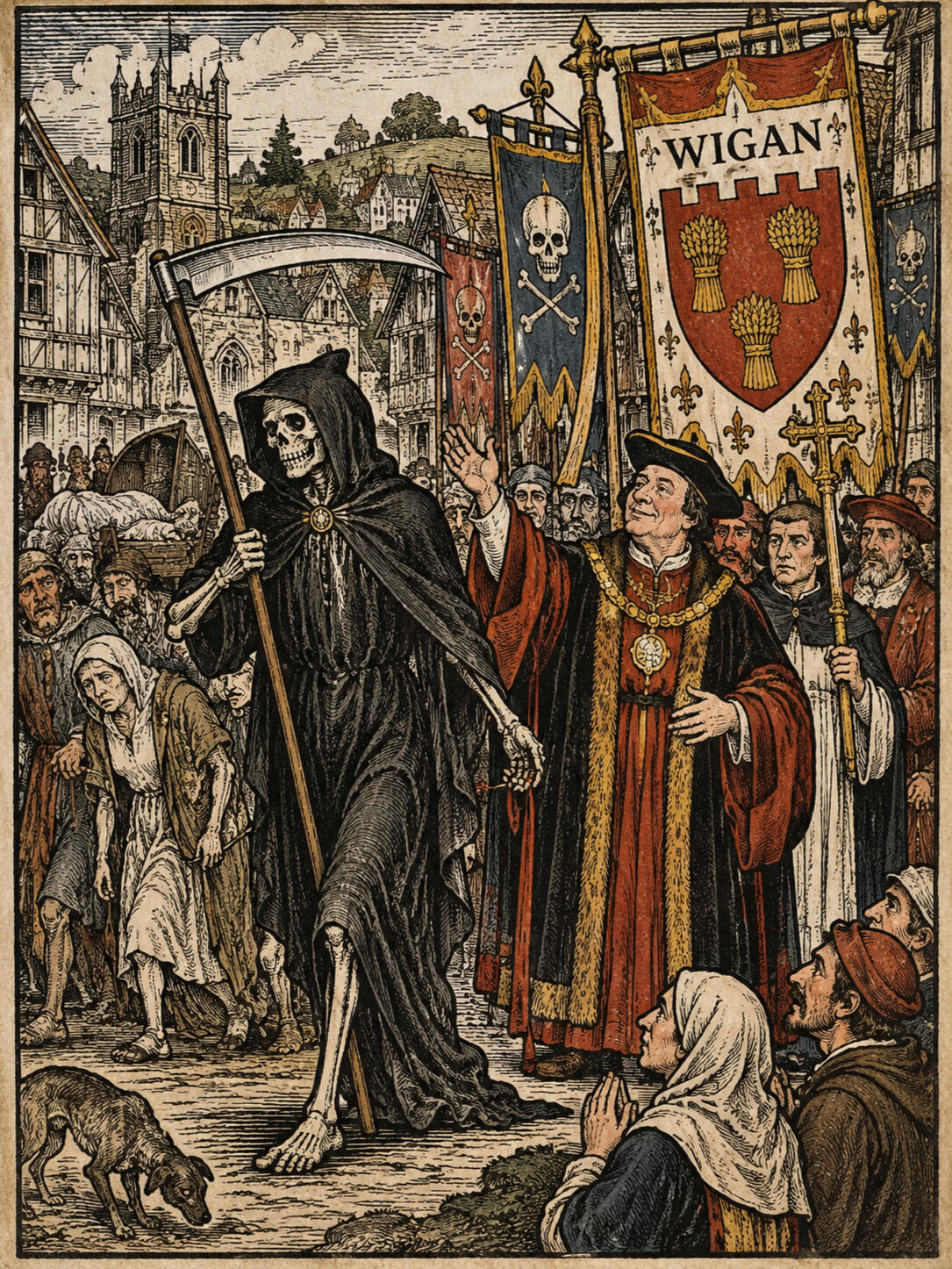
The Triumph of Death (1887)
Artist: Edmund Grimshaw (1842–1906)
In this extraordinary and unsettling wood engraving, Edmund Grimshaw presents a medieval Wigan procession in which Death himself walks openly among the townspeople. Cloaked in black and carrying an enormous scythe, the skeletal figure leads a solemn gathering of civic dignitaries, clergy and impoverished citizens through the crowded streets.Grimshaw was a Victorian illustrator whose fascination with medieval morality, folklore and the darker aspects of British history found expression in a series of elaborate, often disturbing engravings.His densely worked compositions drew upon the traditions of the Danse Macabre, in which Death appears as the great leveller, indifferent to wealth, authority or social position.The contrast between the richly dressed civic official and the suffering townspeople is particularly striking. Beneath the proud banner of Wigan, the dignitary appears remarkably pleased with proceedings, seemingly unaware that the skeletal guest of honour has rather different intentions. Around them, the elaborate architecture, heraldic banners and crowded faces create a scene of theatrical grandeur and mounting unease.The Triumph of Death is a powerful meditation on mortality, inequality and the fleeting nature of earthly importance. Grimshaw's characteristic black humour is unmistakable: while the citizens of Wigan confront the inevitability of death, their civic leaders appear determined to turn the occasion into a respectable municipal ceremony.
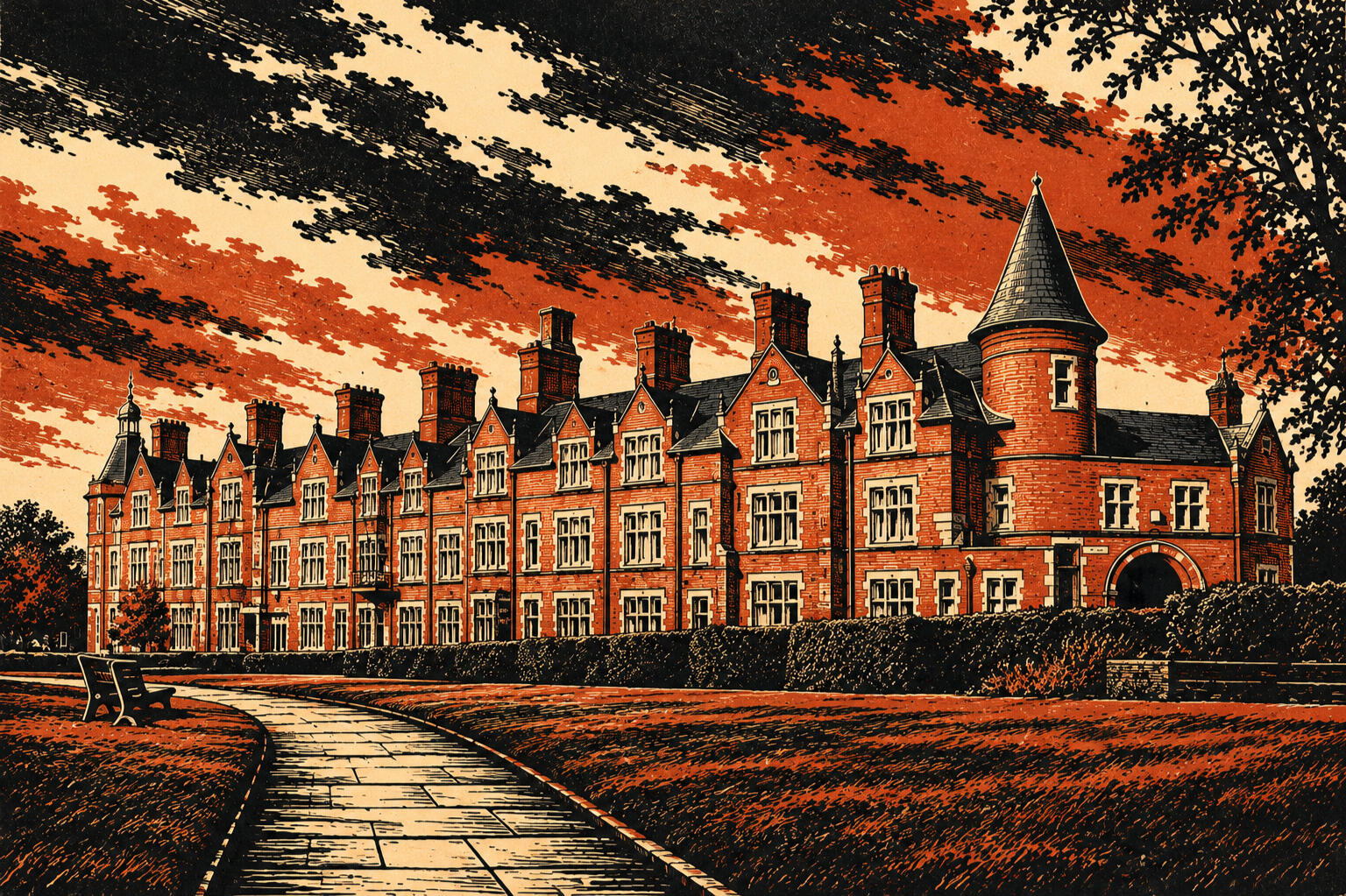
The Old Courts (1934)
Artist: Arthur Bellamy (1881–1957)
In this striking architectural linocut, Arthur Bellamy presents Wigan's Old Courts as a magnificent expression of Victorian civic ambition. Its elaborate red-brick façade, ornamental gables, imposing chimneys and distinctive corner towers stretch across the composition beneath a dramatic, turbulent sky.Bellamy was a Lancashire printmaker whose work celebrated the great municipal buildings of Northern England. Working principally in woodcut and linocut, he developed a distinctive style characterised by strong black outlines, simplified architectural forms and a limited but exceptionally powerful palette.The rich terracotta brickwork contrasts dramatically with the deep black shadows and pale stone detailing, while the sweeping pathway leads the eye towards the building's impressive frontage. Bellamy's vigorous treatment of the sky lends the otherwise orderly architecture an almost theatrical intensity.The Old Courts celebrates a building that embodies Wigan's architectural heritage and enduring civic identity. Bellamy presents this familiar Northern landmark with the grandeur ordinarily reserved for palaces and cathedrals, finding extraordinary beauty in the confident craftsmanship of Victorian Lancashire.
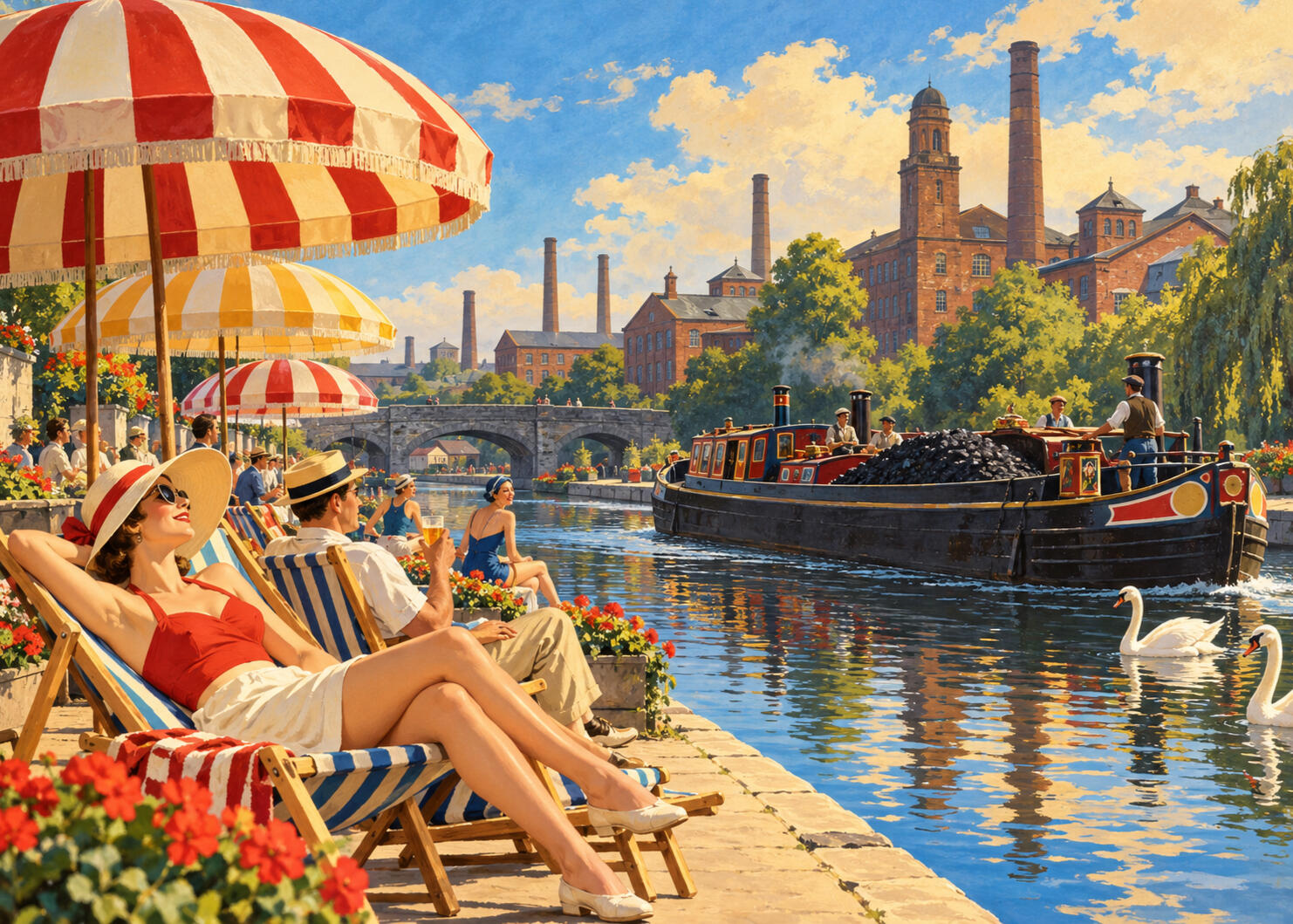
The Riviera of the North (1956)
Artist: Marcel Delacourt (1908–1982)
In this exuberant celebration of Wigan's waterfront, Marcel Delacourt transforms the industrial canal into a fashionable continental resort. Beneath striped parasols, elegantly dressed holidaymakers enjoy the afternoon sunshine while swans glide across sparkling blue water.The magnificent red-brick mills and towering chimneys provide an unmistakably Northern backdrop. A coal-laden narrowboat passes the sunbathers, its working cargo offering a delightful contrast to the leisurely sophistication of the waterside terraces.Delacourt, a French commercial illustrator celebrated for his glamorous railway and holiday posters, was fascinated by the possibility of finding Riviera elegance in Britain's industrial towns. His vivid colours, theatrical sunlight and idealised figures turn the familiar landscape of Wigan Pier into a destination of extraordinary charm.The Riviera of the North is a wonderfully extravagant vision of Lancashire leisure, in which industry and indulgence coexist without the slightest apparent inconvenience.
Have you chosen your favourite?Select your print and preferred size, then complete your purchase securely through Stripe.
All prices include packaging and delivery to your door.